Your Rankings Aren’t Enough Anymore
You’re ranking on Google. Traffic used to be steady. Then suddenly, it starts dipping.
But when you check positions, nothing dramatic has changed.
Here’s what has.
Users are getting answers directly inside tools like ChatGPT, Perplexity, Gemini, and Google AI Overviews. They’re not clicking through to websites the way they used to. AI-generated summaries are replacing traditional blue links.
If your brand isn’t being cited, referenced, or used as a trusted source inside those AI answers, you’re invisible. Meanwhile, your competitors are getting quoted, mentioned, and positioned as authorities.
Welcome to the era of Generative Engine Optimization.
This guide explains how AI search engines choose sources, what ranking signals matter now, how to structure content for AI visibility, and how to future-proof your organic growth strategy.
If you want your brand to be included in AI-generated answers instead of replaced by them, this is your roadmap.
What Is AI Search?
AI search platforms use large language models (LLMs) to generate conversational answers instead of simply listing web pages.
Examples include:
- ChatGPT (with browsing capabilities)
- Perplexity AI
- Google AI Overviews (formerly SGE)
- Google AI Mode
- Gemini
- Claude
Instead of showing ten blue links, these systems:
- Analyze multiple sources
- Synthesize information
- Present summarized answers
- Cite authoritative references
Industry research shows that more than 60% of searches now end without a click. AI Overviews are accelerating this shift.
Visibility inside AI-generated answers is becoming the new ranking battleground.
Generative Engine Optimization (GEO) is the process of optimizing your content so AI-powered search engines select, trust, and cite your website when generating answers.
Traditional SEO focuses on ranking pages.
GEO focuses on being referenced inside AI responses.
It prioritizes:
- Citation visibility in AI answers
- Entity-level authority
- Structured, extractable information
- Strong E-E-A-T signals
In simple terms: SEO helps you rank. GEO helps you get quoted.
Why GEO Matters in 2026
AI engines don’t just rank content. They evaluate credibility across the web.
They assess:
- Topical authority
- Entity recognition
- Brand credibility
- Structured clarity
- Consistency across multiple sources
If your brand lacks strong authority signals, AI models may skip you entirely, even if you rank well traditionally.
GEO ensures your business becomes part of the AI knowledge layer.
AI systems do not rank pages the same way Google’s traditional algorithm does. Their selection logic focuses on trust and clarity.
1. Topical Authority
Websites that demonstrate deep coverage of a subject are favored over those publishing scattered, one-off posts.
A structured content cluster consistently outperforms isolated articles.
2. Entity Recognition
AI models identify brands and authors as entities. They look for:
- Consistent brand mentions
- Recognizable author credentials
- Demonstrated expertise
- Industry associations
The more your brand appears across credible sources, the stronger your entity profile becomes.
3. Structured Information
AI prefers content that is:
- Clearly formatted
- Logically structured
- Easy to extract
- Supported by data
Definitions, bullet lists, FAQs, and structured headings improve selection probability.
4. External Validation
Backlinks still matter. So do citations and digital PR mentions.
AI systems cross-reference information across multiple sources. If your data is validated elsewhere, trust increases.
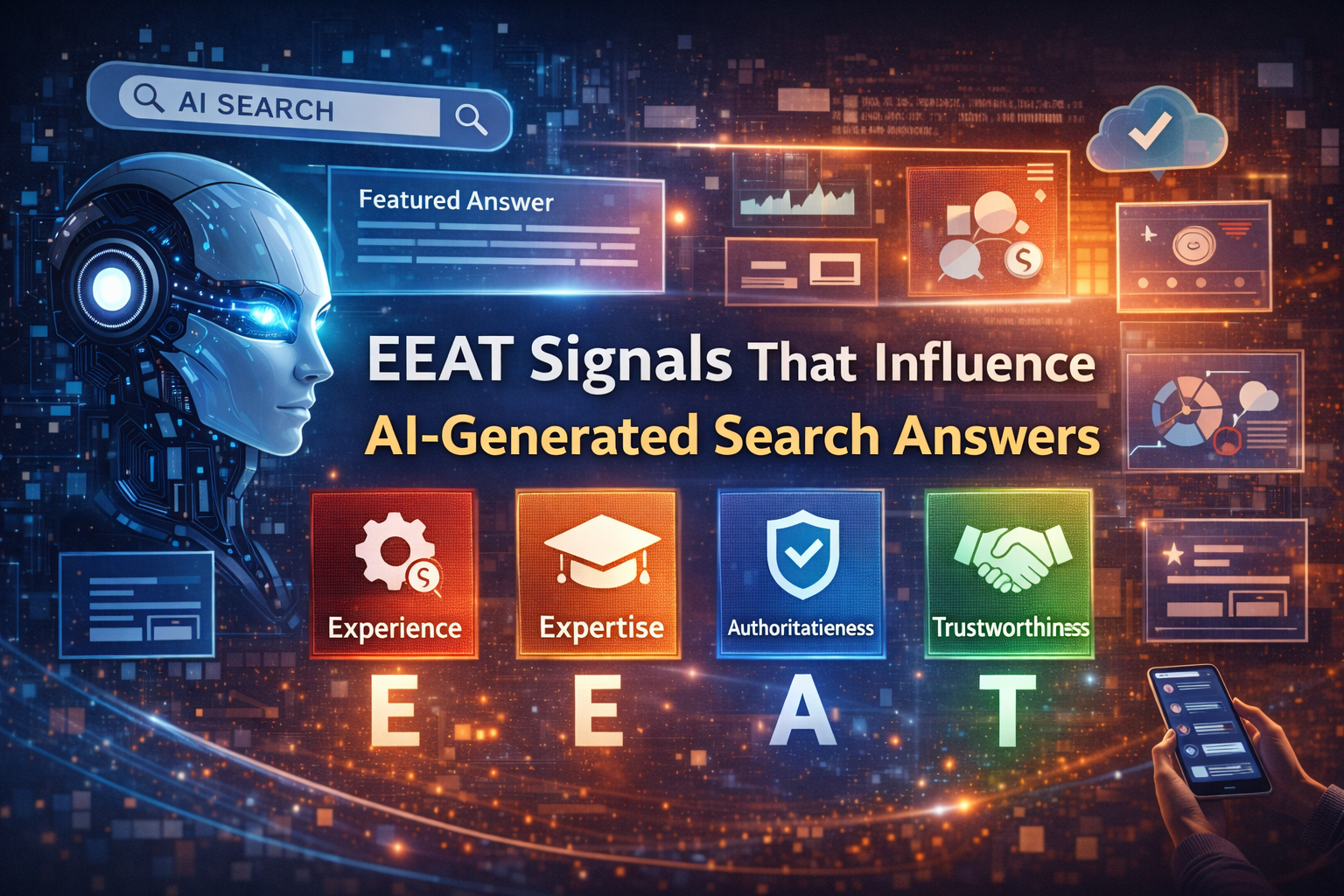
E-E-A-T stands for:
- Experience
- Expertise
- Authoritativeness
- Trustworthiness
AI-powered search relies heavily on these signals.
How to Strengthen E-E-A-T for AI Search
1. Add Real Author Credentials
Include bios, LinkedIn profiles, certifications, and demonstrated industry experience.
2. Publish Original Data
First-party insights carry more weight than recycled summaries.
Think surveys, case studies, performance benchmarks, or proprietary research.
3. Build Brand Mentions
Unlinked brand mentions across authoritative platforms help establish entity authority.
4. Maintain Content Accuracy
Outdated or inconsistent information reduces trust signals across AI systems.
Why Mass AI Content Is Failing
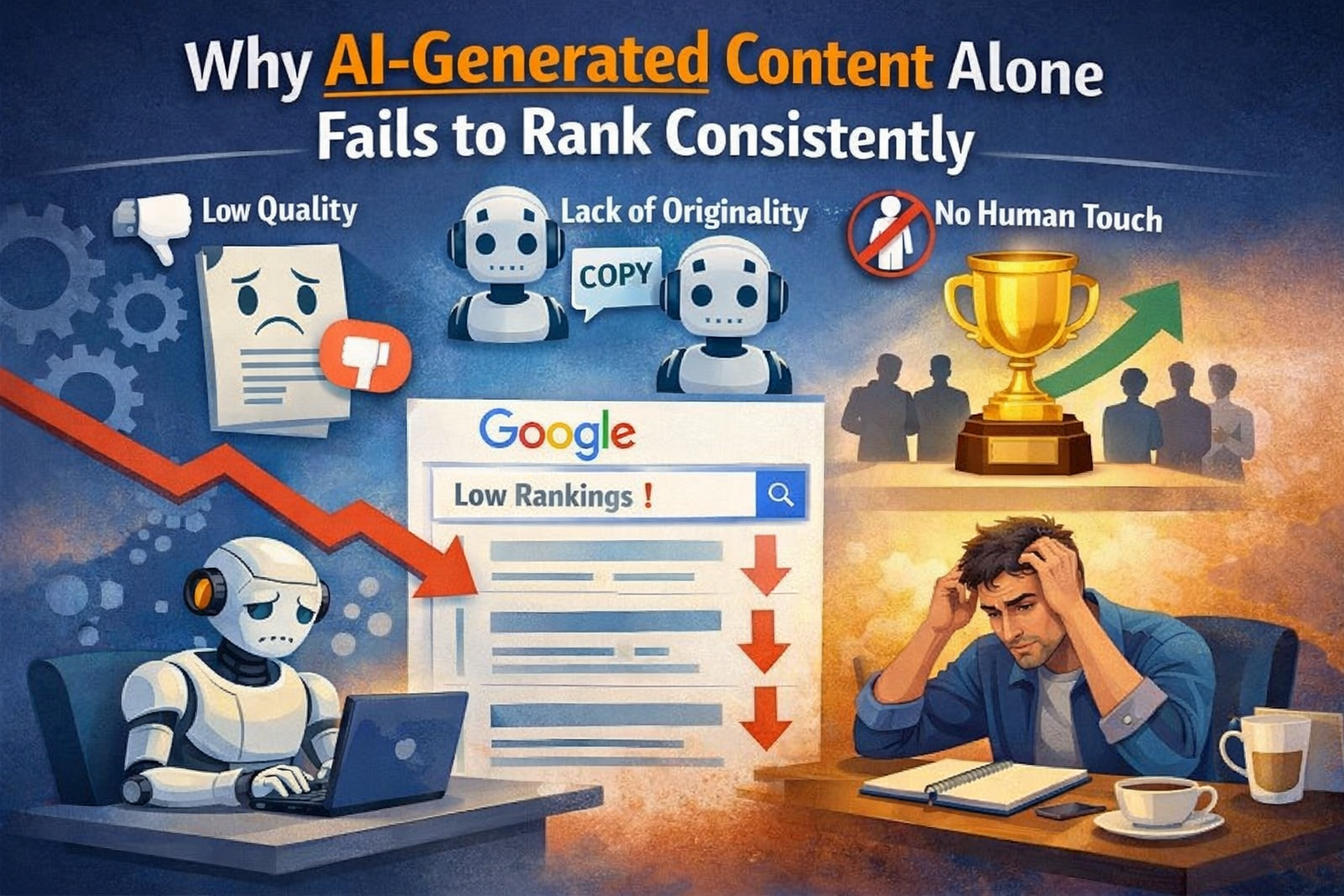
Many businesses are publishing large volumes of AI-generated articles. Long-term, this approach is weakening authority rather than building it.
Here’s why.
Lack of Original Insight
AI content often rephrased existing material. AI systems prefer unique expertise.
No First-Hand Experience
Without real-world signals, E-E-A-T remains weak.
Predictable Structure
Overly templated content reduces differentiation.
Thin Authority
Volume does not equal depth. In 2026, fewer high-quality, authoritative pieces outperform hundreds of generic posts.
The winning strategy combines AI efficiency with human expertise.
How to Structure Content for Google AI Overviews
Structure directly influences extraction.
If you want inclusion in AI summaries, clarity is non-negotiable.
Best Practices for AI-Friendly Content
Start with Clear Definitions
Open sections with concise, direct answers.
Use Structured Headings (H2 & H3)
Semantic hierarchy improves extractability.
Include Credible Data Points
Statistics and verified information increase citation likelihood.
Add FAQ Sections
FAQ schema enhances snippet and AI selection probability.
Use Lists and Tables
Structured formats are easier for AI systems to interpret.
Strengthen Internal Linking
Topic clusters reinforce authority and contextual depth.
SEO vs GEO: What Changes and What Stays
What Remains Essential
- Keyword research
- Technical SEO
- Backlinks
- High-quality content
Strong SEO remains the foundation.
What Evolves
- Focus shifts from ranking to citation
- Entity building becomes central
- Brand authority outweighs keyword density
- Structured clarity becomes critical
- Original research gains priority
SEO drives traffic.
GEO drives AI inclusion.
The most resilient strategy integrates both.
Action Plan: How to Rank in AI Search
Step 1: Build Topical Clusters
Create pillar pages supported by in-depth cluster articles.
Step 2: Strengthen Brand and Author Authority
Optimize your About page, implement schema markup, and highlight expert credentials.
Step 3: Publish Original Insights
Develop case studies, industry commentary, and proprietary data.
Step 4: Optimize for Structured Clarity
Use concise definitions, bullet lists, FAQs, and logical formatting.
Step 5: Earn Authority Mentions
Prioritize digital PR and high-trust mentions over low-quality link building.
The Future of Organic Visibility
Search is shifting from links to answers.
Brands that adapt early will dominate AI-driven discovery. Those that rely solely on outdated SEO tactics will lose relevance.
The goal is no longer just ranking.
The goal is becoming the source AI trusts.
Ready to Future-Proof Your Organic Growth?
If you want your brand to appear inside AI-generated answers instead of disappearing behind them, you need a structured SEO + GEO strategy.
At Grocat, we help businesses:
- Build topical authority
- Strengthen E-E-A-T signals
- Optimize for AI search visibility
- Align organic strategy with revenue growth
Book a strategy consultation today and position your brand for AI-first search dominance: Contact Us